Why cemetery rules shape your headstone, and how to find out what applies
A cemetery's guidelines can feel like an obstacle, but they are easier to work with once the reasons behind them are clear.
October 2, 2026 · 4 min read
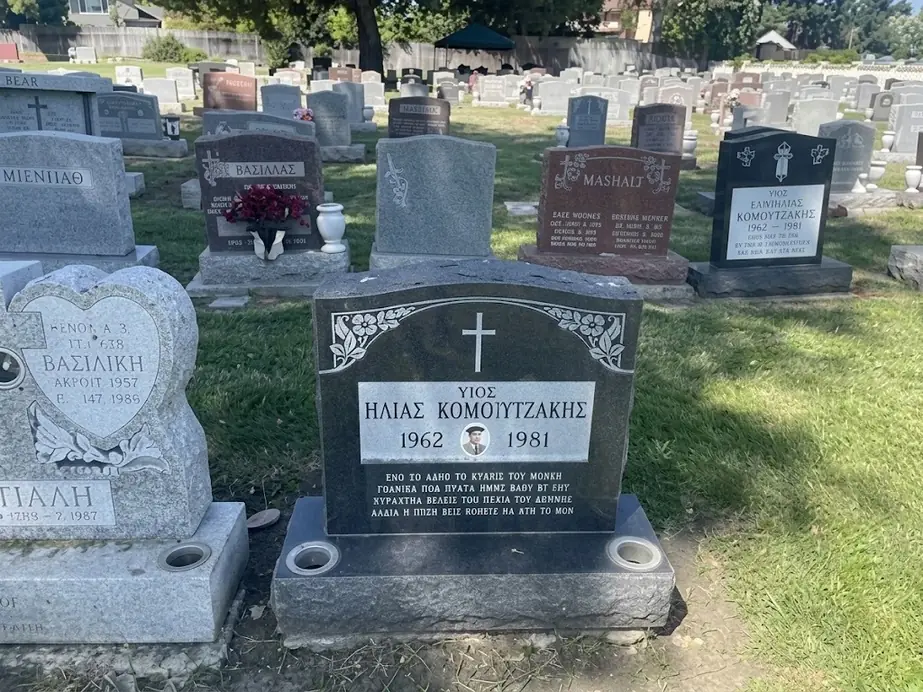
Many families come to a monument company with a clear picture of the stone they want, only to learn that the cemetery has its own requirements. At such a tender time, that can feel like one more obstacle. It helps to understand why the rules exist. Once the reasons make sense, the process gets easier to work through, and the stone you end up with is usually better for it.
Why cemeteries have rules at all
A cemetery is a shared place that a small crew has to care for across decades. Its guidelines protect that work and keep each section looking consistent for every family who visits. One oversized stone in a row of low markers might look fine on its own, but it can make mowing, digging and maintenance harder for everyone else.
The reasons are mostly practical, and they tend to fall into a few groups.
- Maintenance: mowers, trimmers and other equipment need clear access, so some sections allow only flush markers.
- Ground conditions: the soil and drainage in a section affect how heavy a stone can be and how its foundation should be built.
- Visual harmony: sections are often planned so that stones share a similar height and character.
- Safety: tall or heavy stones must be set properly so they don't shift or lean.
What the guidelines tend to cover
We can't tell you what any single cemetery requires, because that is the cemetery's decision and it can change. In general, though, guidelines concern a handful of things: the type of marker (flat, bevel, slant or upright), the maximum dimensions, the permitted materials, the foundation, and sometimes the decoration, such as whether items may be placed on or beside the stone.
One detail catches people out. Different sections within the same cemetery can have different guidelines. Hearing that the cemetery allows a certain stone is rarely a complete answer. The section and the exact plot matter, and so does the question of a first stone versus an addition to one already there.
How the rules shape size, material and style
Size is usually the first thing a guideline touches. A lawn-style section may call for a compact flush marker, while another part of the grounds may welcome a taller upright. The footprint of the base is often part of the limit as well, which is why a design that looks right on paper has to be checked against the real dimensions.
Material can be shaped by the guidelines too. Granite is the most common choice for cemetery memorials because it weathers slowly and holds deep-cut lettering well, and it comes in a range of tones. If a section asks for a particular color family or finish, that narrows the choices, though a good many options usually remain.
Style is where families tend to worry most, and often needlessly. Rules about type don't usually remove the personal side of a memorial. A flat stone can still carry a border, an emblem, a floral design or an etched portrait, and the lettering itself can be traditional, modern or calligraphic.
How to find out what your section allows
The surest route is simply to ask, and the questions are short.
- Write down the section, row and plot number. Everything else depends on knowing exactly where the stone will go.
- Call or visit the cemetery office and ask for their memorial guidelines for that section, in writing if they have them.
- Ask which marker types, maximum dimensions and materials are permitted, and what the foundation needs to look like.
- Ask whether the cemetery reviews a design before the stone is made, and how that review works.
- Keep a copy of what they tell you. It becomes the reference everyone designs against.
If making that call feels like too much right now, it's a perfectly reasonable thing to hand to someone else. We are glad to check with the cemetery office for you, once we know the cemetery and the section.
Working with a monument maker on the rules
At Gray Stone Monument, memorials are designed and sized to meet the dimensions and guidelines of local Sacramento-area cemeteries, and the work moves from initial photo prototypes and layout concepts through to final stone finishing. Having the rules in hand at the start means the first sketch you see is one that can actually be placed.
It also saves families from a quieter kind of disappointment: falling in love with a design that the section will not accept. Learning the limits first costs nothing, and it lets the creative decisions, the wording, the finish, the symbols, happen on firm ground.
When the rules feel limiting
Sometimes a family hopes for a large upright and the section allows only a flush marker. That can be a real disappointment, and it's fine to feel it. What often helps is shifting attention to what the smaller stone can hold. A thoughtful layout, a well-chosen finish and a single meaningful line can say a great deal in a small space.
If you're partway through planning and the guidelines have thrown the picture off, you aren't behind. Gray Stone Monument serves Sacramento, Elk Grove and the surrounding area, and a free memorial consultation is available by phone at (916) 300-5785, Monday through Friday, 8am to 5pm. Bring the cemetery's paperwork if you have it, and we'll look at it together without any pressure to decide.
Gray Stone Monument, (916) 300-5785
Call (916) 300-5785More articles
Headstone or grave marker? Flat, bevel, slant and upright explained
The words get tangled quickly, so here is a calm way to tell the four common memorial shapes apart.
Adding a final date to a headstone already in place
When a stone was made for two, completing it later is a quiet, careful piece of work that deserves to look as though it was always meant to be there.